



Kids today are growing up in a world of screens and sedentary entertainment. That makes it all the more meaningful when a product genuinely pulls them outside, gets their blood pumping, and puts a massive grin on their face. Electric go karts have done exactly that for millions of families across North America, Europe, and Australia — and the market is growing fast.
But here's something every parent quickly discovers: not all kids' electric go karts are created equal. Walk into any wholesale showroom or browse any B2B catalog and you'll find single-speed models stacked next to multi-gear configurations. The difference matters more than most buyers realize — especially if you're purchasing for a growing child, or sourcing inventory for diverse customer demographics.
This guide is built around one question: why choose a 4-gear electric go kart for kids? By the time you finish reading, you'll understand exactly what sets multi-gear models apart, how they affect safety and skill development, and what to look for when choosing the right unit — whether you're a parent, a dealer, or an international distributor.
What Is a 4-Gear Electric Go Kart?
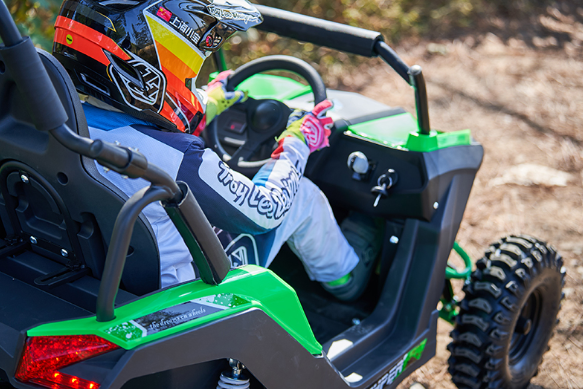
A 4-gear electric go kart is a battery-powered kart equipped with a transmission system that offers four distinct speed settings or gear positions. Think of it like a bicycle with multiple gears — lower gears deliver slower, more controlled speed, while higher gears unlock progressively faster performance.
This is fundamentally different from a single-speed electric go kart, which has one fixed speed output. On a single-speed model, the throttle controls acceleration within a fixed range, but there's no way to cap or stage the maximum speed. The child either rides at full capability or they don't — there's no middle ground.
On a 4-gear model, the parent (or the child, depending on age and skill level) selects the appropriate gear before riding. Gear 1 might deliver a maximum speed of around 5–8 km/h — gentle enough for a 3-year-old on flat ground. Gear 4 might reach 20–30 km/h, which is appropriate for a confident 10–12-year-old on an open track or mild off-road terrain.
The gear selection typically operates via a rotary switch or a button panel on the dash, sometimes lockable by a parent using a separate key or control. The electric motor's controller reads the selected gear and regulates power output accordingly. It's clean, responsive, and mechanically straightforward — far simpler to operate than the gear systems on gasoline vehicles.
Key Benefits of a 4-Gear Electric Go Kart for Kids
Adjustable Speed for Different Skill Levels
The single most compelling advantage of a 4-gear system is that the kart grows with your child. A 5-year-old just discovering outdoor vehicles doesn't need the same performance as an 8-year-old who's been riding for two seasons. With a single-speed kart, you buy for today and outgrow it next year. With a 4-gear model, you set Gear 1 for beginners and unlock higher gears as confidence and skill develop.
This is also critical for dealers and distributors. When a parent asks "will my child still enjoy this in two years?" a 4-gear kart answers that question with a convincing yes. It widens your sales demographic significantly — you're not selling to parents of 6-year-olds only. You're selling to families who want a product that lasts through childhood.
Enhanced Safety and Control
Speed control is child safety in its most practical form. Young riders lack the reaction time, spatial awareness, and physical coordination to manage sudden acceleration or high speeds safely. A 4-gear system gives parents direct authority over how fast their child can go.
In Gear 1, even a small child who fully depresses the throttle won't generate dangerous speed. The kart simply can't exceed the gear's limit. This is fundamentally different from speed limiters on single-speed models, which often work by voltage reduction rather than a discrete, stable gear system — making them less predictable under load.
Beyond speed, a lower gear also improves handling stability. At lower outputs, the kart tracks more predictably, cornering forces are lower, and the child has more time to react. This is especially important on off-road terrain, where uneven surfaces can cause unexpected changes in direction.
Better Learning Experience
There's a reason driving instructors teach new drivers in first gear. Starting slow gives learners time to understand steering feedback, braking distance, throttle sensitivity, and spatial judgment without being overwhelmed.
The same principle applies to kids' go karts. A child who starts in Gear 1 and earns their way up to Gear 3 or 4 develops genuine driving intuition. They understand the connection between throttle input and speed. They learn to brake early, look ahead, and read the terrain. These skills don't develop when you put a child on maximum speed from day one.
Parents consistently report that children who progress through gear stages become noticeably more confident and skilled drivers — not just in go karts, but in other recreational vehicles as well.
Longer Product Lifespan as Kids Grow
Let's talk economics. A quality kids electric go kart is a meaningful investment. For a parent buying retail, it might represent several hundred dollars. For a dealer stocking inventory, unit cost, shipping, and warranty coverage all factor into margin calculations.
A 4-gear kart extends the usable product life considerably. Where a single-speed beginner kart might be outgrown in 12–18 months as the child's confidence and physical size increase, a 4-gear model can comfortably serve a child from age 3 to age 10 or beyond, depending on build quality and weight capacity.
For distributors and retailers, this translates directly into higher perceived value, fewer returns, and stronger word-of-mouth from satisfied families. The child doesn't outgrow the kart — they grow into it.
Improved Off-Road Performance
Standard single-speed karts are often optimized for flat, smooth surfaces. They perform well on driveways and paved courts but struggle when terrain gets uneven. A 4-gear electric go kart changes this equation entirely.
Lower gears provide more torque at slower speeds — crucial for navigating grass, gravel, loose dirt, and gentle slopes. The motor isn't fighting to maintain a fixed output against variable resistance. Instead, in a lower gear, it delivers steady, controlled power that keeps the kart moving without wheel spin or stalling.
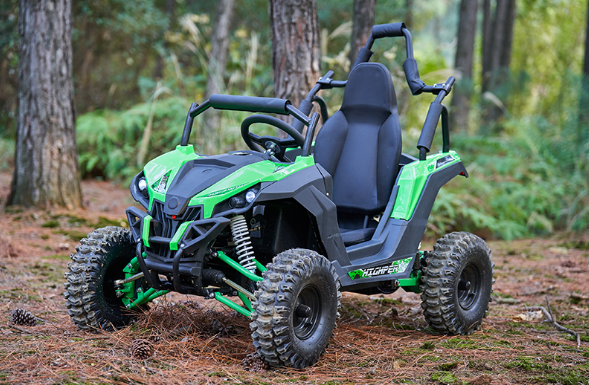
This makes 4-gear models genuinely versatile. Families with backyard trails, rural properties, farms, or access to off-road areas get a vehicle that can actually handle real-world conditions. Browse the full range of electric go karts at Highper and you'll see how purpose-built off-road configurations pair beautifully with multi-gear control systems.
More Exciting Riding Experience
There's something tangibly more engaging about earning your way to a higher gear. It adds a layer of progression and achievement to riding — something kids instinctively respond to. "Today I got to Gear 3!" is a real milestone for a 6-year-old. That kind of gamified progression keeps kids motivated and active.
Older children also appreciate the performance ceiling that Gear 4 unlocks. On appropriate terrain, a 4-gear kart in top gear delivers a legitimate thrill — enough speed to feel exciting without crossing into genuinely dangerous territory for a supervised, experienced young rider.
Why Parents Prefer Adjustable-Speed Go Karts
Ask any parent who has purchased a single-speed kids go kart what they'd change, and the answer comes up repeatedly: they wish they had more control over speed.
It's not that parents want to restrict fun. It's that they want to match speed to context. A child riding in a large, open backyard can handle more speed than the same child navigating a narrower garden path. A child on a calm summer afternoon with an attentive parent nearby is in a different situation than a child riding near other kids or pets.
Adjustable speed puts the parent in charge of that context-matching. Set the gear before the session, hand over the kart, and supervise confidently knowing the vehicle can't exceed the limit you've set. This is peace of mind that single-speed karts simply can't offer.
Beyond immediate safety, speed progression also builds genuine confidence. When a child masters Gear 1 and earns Gear 2, they experience real achievement. Their skill and confidence are aligned with their performance level. This produces a healthier, more positive relationship with the vehicle than throwing a beginner into a full-speed kart from the start.
4-Gear Go Kart vs. Single-Speed Go Kart
| Feature | 4-Gear Electric Go Kart | Single-Speed Electric Go Kart |
|---|---|---|
| Speed Control | 4 discrete, stable levels | Fixed speed range, throttle only |
| Safety for Beginners | Excellent — Gear 1 limits max speed | Moderate — dependent on throttle discipline |
| Learning Curve | Gradual, staged progression | Immediate full performance exposure |
| Off-Road Capability | High — lower gears provide torque control | Limited — optimized for flat surfaces |
| Flexibility | Suits ages 3–12+ | Usually suits a narrow age/skill window |
| Product Longevity | 5–7+ years of use across skill stages | Typically 1–2 years before outgrown |
| Excitement Factor | Progressive — grows with the child | Fixed — limited progression |
| Cost Effectiveness | Higher upfront, far lower cost-per-year | Lower upfront, sooner outgrown |
| Parent Control | Direct — parent sets gear before riding | Indirect — relies on child throttle control |
The math is straightforward. For most families, the 4-gear model delivers better value, longer use, and a safer, more educational riding experience. The slightly higher purchase price pays for itself within the first riding season.
What Age Is Best for a 4-Gear Electric Go Kart?
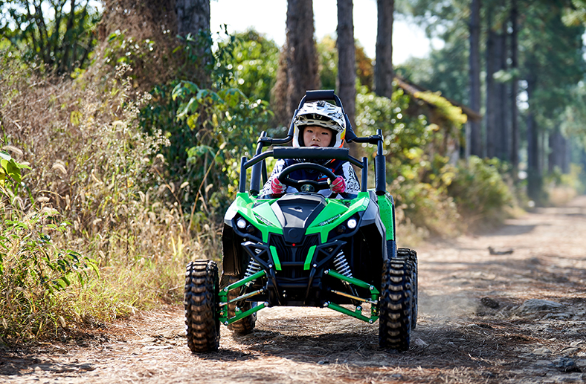
This is one of the most common questions parents ask, and the honest answer is: it depends on the specific model, but most 4-gear electric go karts comfortably serve children from approximately 3 to 12 years old.
Here's a general framework:
Ages 3–5 (Gear 1 only): Children in this range are just developing basic motor control and spatial awareness. Gear 1, delivering around 5–8 km/h, is appropriate for flat surfaces with close parental supervision. Focus should be on learning steering and basic throttle use — not speed. Check out Mini Electric Go Karts for models specifically sized for younger riders in this range.
Ages 5–7 (Gears 1–2): Children become more coordinated and spatially aware. Gear 2 introduces a noticeable but manageable speed increase. Supervision is still essential, but the child can begin making more independent decisions behind the wheel.
Ages 7–9 (Gears 1–3): This is when riding genuinely takes off. Children in this range have developed the reaction time and judgment to handle moderate speeds safely. Gear 3 unlocks real performance while keeping the kart well within manageable limits.
Ages 9–12+ (All 4 Gears): Older, experienced young riders can safely access full performance in appropriate environments. Gear 4 on an open course or private property with competent supervision delivers a legitimately exciting ride.
Weight considerations matter as much as age. Most kids' electric go karts have a maximum weight capacity of 50–80 kg. Always verify the model's spec sheet against the child's current and near-future weight. A child approaching the weight limit will experience altered handling, braking performance, and battery range.
Supervision is non-negotiable regardless of gear or age. Even confident, experienced young riders benefit from adult presence — particularly in new environments or on unfamiliar terrain.
Important Safety Features to Look For
Not all safety features are equal, and the differences matter considerably when a child is involved. Here's what to prioritize:
Seat Belt / Safety Harness: A proper seat belt keeps the child securely positioned even if the kart hits a bump or makes a sudden direction change. Look for a 3-point or 5-point harness on karts designed for younger children.
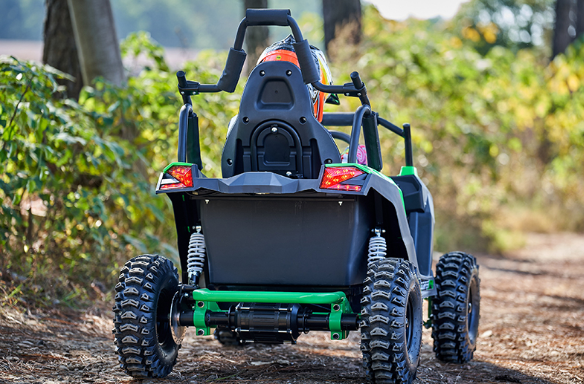
Roll Cage: A sturdy steel roll cage protects the rider in the event of a tip-over. This is especially important for off-road models where uneven terrain increases rollover risk. The roll cage should be welded, not bolted, and constructed from heavy-gauge steel tubing.
Speed Limiter / Gear Lock: The gear selector itself functions as a speed limiter on a 4-gear kart, but additional electronic limiters or key-lockable gear selectors add a further layer of parent control. Some models allow parents to set a maximum gear remotely or via a physical key.
Disc Brakes: Hydraulic disc brakes provide significantly better stopping power than drum brakes, especially under load or on downhill terrain. For any kart that will see off-road use or higher gear performance, disc brakes are essential.
Durable Frame Construction: Look for welded steel or heavy-gauge aluminum frames. Lightweight plastic-heavy frames may reduce purchase cost but compromise both safety and longevity. Ask suppliers for frame material specifications and weld quality documentation.
Adjustable Seating: Children grow quickly. Adjustable seats and pedal positions ensure the child always sits in the correct ergonomic position — important for both comfort and control. A child reaching for pedals or sitting too far forward loses steering leverage and braking effectiveness.
Pneumatic Tires: Air-filled tires absorb terrain vibration far better than solid rubber tires, improving both comfort and handling — particularly on off-road surfaces.
How to Choose the Best 4-Gear Electric Go Kart
Buying a kids electric go kart involves more variables than most people expect. Here's a practical step-by-step framework:
Step 1 — Establish the Rider Profile Age, weight, current riding experience, and intended terrain. A 4-year-old on a flat driveway has completely different requirements from a 9-year-old with two years of backyard off-road experience.
Step 2 — Define the Use Environment Flat pavement, backyard grass, loose dirt trails, and gravel each require different tire, suspension, and motor specs. Be honest about where the kart will actually be used, not just where you hope to use it.
Step 3 — Check Weight Capacity and Frame Size Verify the kart comfortably fits the child now and will still fit in 2–3 years. Check both weight capacity and seat-to-pedal adjustability range.
Step 4 — Verify Safety Certifications Reputable manufacturers will have CE, ASTM, or equivalent certifications for their kids' vehicles. Ask for documentation, not just verbal assurances.
Step 5 — Evaluate Battery Range and Charge Time A child who gets 15 minutes of riding before needing a 4-hour recharge is going to be frustrated quickly. Look for models with at least 45–60 minutes of runtime per charge, and verify charge time is reasonable (under 6 hours).
Step 6 — Assess After-Sales Support Parts availability, warranty terms, and manufacturer responsiveness matter enormously — especially for dealers and distributors stocking inventory for customers. A manufacturer who disappears after the sale is a liability.
Step 7 — Compare Total Cost of Ownership Purchase price divided by years of useful service life tells you far more than the sticker price alone. A 4-gear kart that costs 30% more but serves a child twice as long is actually the cheaper option.
For dealers and importers evaluating Midi Electric Go Karts for their catalogs, consider carrying multiple size configurations to serve the full 3–12 age range — the cross-sell and upsell opportunities are substantial.
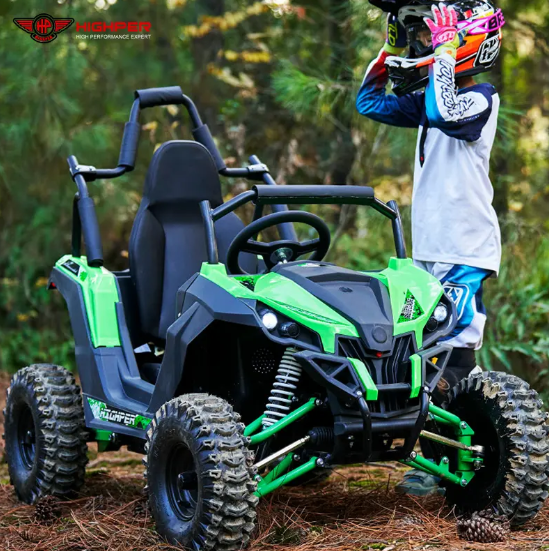
Why Highper Electric Go Karts Stand Out
Highper was founded in 2009 in Hangzhou, China, with a focus on powersports vehicles for children and young riders. Fifteen-plus years of manufacturing experience in this specific niche makes a real difference — both in product quality and in the practical knowledge that informs every design decision.
Manufacturing Depth: Highper operates its own production facility rather than relying on third-party assembly. This means tighter quality control at every stage — from frame fabrication and motor sourcing to final assembly and pre-shipment testing. Visiting importers and distributors consistently note the consistent build quality across production batches, which matters when you're stocking hundreds of units.
OEM and ODM Capabilities: For distributors and retailers who want branded product lines, Highper offers full OEM and ODM services. You can source product built to your specifications — custom colors, badging, speed configurations, and packaging — without building your own manufacturing infrastructure. This is a meaningful competitive advantage for regional brands looking to differentiate.
Global Export Track Record: By 2021, Highper was shipping over 600 containers annually to 58 countries and regions. That kind of export volume represents established freight relationships, customs documentation experience, and the logistical infrastructure to handle large, time-sensitive orders reliably. New import partners benefit directly from this experience.
Product Range: Beyond electric go karts, Highper manufactures ATVs, dirt bikes, mini bikes, and electric scooters — making it practical for dealers to consolidate their recreational vehicle sourcing under one trusted supplier relationship.
Certifications: Highper products carry the certifications required for export to major markets, including CE for European importers. Certification documentation is available on request, which simplifies the compliance process for importers navigating their local regulatory requirements.
To learn more about production standards and facility capabilities, the About Us section includes a factory tour and customer group photos that give genuine insight into operations — not just marketing copy.
Frequently Asked Questions
Is a 4-gear go kart safer than a single-speed model for kids?
Yes, generally speaking. The 4-gear system gives parents direct control over the maximum speed the kart can reach, independent of throttle input. This is a more reliable safety mechanism than relying on a child's throttle discipline alone.
How fast does a kids 4-gear electric go kart go?
This varies by model, but a typical 4-gear kids go kart might offer: Gear 1 at 5–8 km/h, Gear 2 at 10–12 km/h, Gear 3 at 15–18 km/h, and Gear 4 at 20–30 km/h. Always verify the specific model's specifications.
Can parents control which gear the child can access?
On most quality 4-gear models, yes. Many feature a key switch or lockable gear selector that prevents the child from accessing gears above what the parent has set. This is a key selling point for safety-conscious buyers.
What age is appropriate for a 4-gear electric go kart?
Most 4-gear kids go karts are suitable from approximately age 3 (Gear 1 only, with supervision) through age 12 or beyond, depending on the model's size and weight capacity.
Are electric go karts suitable for beginner riders?
Absolutely — in fact, they're often better for beginners than gasoline models because the power delivery is smoother and more predictable. Starting in Gear 1 gives beginners a very forgiving introduction to go kart driving.
How long does the battery last on a charge?
This varies by motor size and riding conditions, but most mid-range kids electric go karts deliver 45–90 minutes of runtime per charge. Off-road use and heavier riders will reduce this figure.
How long does it take to charge the battery?
Typically 4–8 hours for a full charge, depending on battery capacity and charger output. Some newer models support faster charging. Always use the manufacturer-supplied charger to avoid battery damage.
What maintenance does a kids electric go kart require?
Electric go karts require far less maintenance than gasoline models — no oil changes, no fuel filters, no carburetor adjustments. Regular maintenance includes checking tire pressure, inspecting brake pads, lubricating chain or drive components (where applicable), tightening bolts after the first few rides, and periodically checking battery terminal connections.
Can a 4-gear electric go kart be used off-road?
Yes, provided the model is designed for off-road use. Look for pneumatic tires, adequate ground clearance, and a robust suspension system. Many 4-gear models are specifically designed for mixed terrain. Check the product specifications carefully — not all electric go karts labeled "off-road" have the suspension and clearance to handle serious terrain.
What's the weight limit on a typical kids electric go kart?
Most models designed for younger children have weight limits of 50–70 kg. Larger midi-sized models can accommodate up to 80–100 kg. Always verify the specific model's rating.
Do 4-gear electric go karts require assembly?
Most arrive partially assembled and require final assembly of components like the steering wheel, roll cage bars, and seat. Quality manufacturers include clear assembly instructions and the required tools. Professional dealers typically offer pre-delivery assembly as a service.
Can speed settings be adjusted mid-ride?
On most models, gear selection is done before or during a pause in riding rather than at speed. Some electronic configurations allow adjustment while moving, but this isn't standard and isn't recommended for younger riders.
What's the difference between mini and midi electric go karts for kids?
Mini models are sized for younger, smaller children — typically ages 3–6 — with smaller frames, lower seating positions, and lower power output. Midi models accommodate older, larger children — typically ages 6–12 — with larger frames, more power, and greater top speed. For a full comparison, browse the Mini Electric Go Karts and Midi Electric Go Karts categories side by side.
How do I know if a manufacturer's quality certifications are legitimate?
Ask for copies of the actual certification documents and verify the certification body independently. CE marks, for example, can be verified through the EU's NANDO database. Reputable manufacturers welcome this scrutiny.
Are Highper electric go karts available for wholesale and OEM orders?
Yes. Highper supports wholesale, OEM, and ODM orders with flexible minimum quantities depending on the product line. For specific MOQ, pricing, and customization options, contact the team directly through the Contact Us page.
Conclusion
The case for a 4-gear electric go kart over a single-speed model isn't complicated — it's just not always explained clearly. More gears mean more control. More control means better safety. Better safety means more riding time, more fun, and more confidence built in the right sequence.
For parents, the value is in knowing exactly what speed their child can reach, and in watching that child genuinely earn their way to higher performance. For dealers and distributors, the value is in a product that serves a wider customer demographic, delivers stronger perceived value, and generates the kind of satisfied customer stories that drive referrals and repeat business.
Whether you're a family looking for the right outdoor activity vehicle or a global importer building out a recreational vehicle catalog, the 4-gear electric go kart belongs in the conversation. It's not a luxury feature — it's a practical engineering choice that makes the riding experience safer, more educational, and more enduring.
Highper has been building these vehicles since 2009, shipping to over 58 countries, and refining designs based on real-world feedback from families, dealers, and distributors around the world. That's not a claim — it's a track record you can verify.
Ready to explore Highper's electric go kart lineup?
Browse the full range of Electric Go Karts — from beginner-friendly mini models to off-road midi configurations built for older, more adventurous riders. For wholesale pricing, OEM inquiries, or distributor partnership discussions, visit the Contact Us page and get in touch with the Highper team directly.
Post time: Jun-11-2026