



Article Summary
Maintaining an ATV quad bike isn't a one-time task; it's an ongoing discipline that determines whether your machine lasts five years or fifteen. This guide walks through a complete ATV maintenance checklist covering engine oil, filters, cooling, brakes, tires, suspension, and drivetrain care, paired with a riding-hours-based service schedule, common mistakes owners make, and how terrain types like mud, sand, and rocky trails accelerate wear. Whether you ride for recreation, hunting, farm work, or run a dealership, this article gives you the practical framework to protect your investment and avoid costly downtime.
Key Takeaways
- Most ATV performance loss traces back to deferred maintenance, not mechanical defects — oil, filters, and tire pressure are the three most commonly neglected items.
- A riding-hours-based schedule (not just calendar time) gives a more accurate picture of when your ATV actually needs service.
- Off-road conditions like mud, sand, and water crossings dramatically shorten maintenance intervals compared to manufacturer "average use" estimates.
- Genuine parts and proper storage habits add years to an ATV's usable lifespan, especially for the battery, drivetrain, and suspension components.
- A well-engineered ATV with quality components from the start reduces the total cost of ownership far more than any single maintenance habit can.
ATVs are built to take a beating. Mud, rocks, water crossings, steep climbs — that's what a quad bike is designed for. But "built tough" doesn't mean "maintenance-free." Every hour spent on rough terrain puts stress on the engine, drivetrain, suspension, and electrical system, and that stress adds up quietly until a rider notices the machine just isn't performing the way it used to.
Most performance decline on an ATV doesn't come from a single dramatic failure. It comes from small, deferred tasks: an oil change pushed back a few weeks, an air filter that didn't get cleaned after a dusty ride, tire pressure that was never checked before heading out. Individually, these seem minor. Together, they're the leading cause of premature engine wear, drivetrain failure, and unexpected repair bills.
The upside is that ATV maintenance isn't complicated. It doesn't require a mechanic's certification or an expensive shop visit every month. With a consistent routine and the right ATV maintenance checklist, most owners can keep their quad running at peak performance for a decade or more — whether it's a recreational trail machine, a farm utility ATV, or a fleet vehicle at a rental business. This guide breaks down exactly what to inspect, how often, and why each task matters for long-term reliability.
Why Regular ATV Maintenance Is Essential
An ATV engine works harder than most people realize. Unlike a car cruising at a steady highway speed, a quad bike's engine is constantly shifting between high-RPM bursts for climbing, low-speed torque for crawling through mud, and sudden stops for obstacles. That variability puts more cumulative stress on internal components than the mileage alone would suggest.
Regular maintenance matters for three concrete reasons:
- It protects the most expensive components. Engines, transmissions, and electric drivetrains are the costliest parts to replace. Clean oil, properly tensioned chains, and well-lubricated suspension all reduce friction and heat — the two biggest contributors to premature part failure.
- It preserves resale and trade-in value. A documented maintenance history (oil change records, filter replacements, service logs) is one of the strongest factors in resale price for both gas and electric ATVs.
- It keeps the rider safe. Worn brakes, underinflated tires, or a loose fastener aren't just performance issues — they're safety hazards, especially at speed or on technical terrain.
ATVs that receive consistent care typically outlast neglected machines by years, not months. The difference in long-term cost between a well-maintained ATV and a neglected one isn't measured in dollars spent on maintenance; it's measured in the cost of the repairs maintenance would have prevented.
ATV Maintenance Checklist for Long-Term Performance
This is the core routine every ATV owner should build into their riding habits. Each item below should become second nature, whether you ride weekly for recreation or run a fleet of utility ATVs on a farm.
Inspect Engine Oil Regularly
Engine oil lubricates, cools, and cleans internal engine components simultaneously, which is why it degrades faster in an ATV than in a typical passenger vehicle. Heat cycling, dust contamination, and water exposure (especially during creek crossings) all accelerate oil breakdown.
Check the oil level and color before every ride using the dipstick or sight glass. Fresh oil is amber and translucent; oil that looks dark, gritty, or milky (a sign of water contamination) needs immediate attention, not just a top-off. Running an ATV with low or degraded oil is one of the fastest ways to cause irreversible engine wear.
Change Oil and Filters on Schedule
Oil changes are the single most important maintenance task for any gas-powered ATV. Most manufacturers recommend changing oil and the oil filter every 20–25 hours of riding, or roughly every three months for moderate use — but heavy off-road use, frequent water crossings, or extended idling in dusty conditions can cut that interval in half.
Always use the oil viscosity and classification specified in your owner's manual. ATV engines often run hotter and at higher RPMs relative to displacement than car engines, so substituting automotive oil for ATV-specific oil can lead to inadequate protection, particularly for wet-clutch transmissions that share oil between the engine and clutch system.
Maintain Air Filters
The air filter is the engine's first line of defense against dust, sand, and debris — and on an ATV, that defense gets tested constantly. A clogged or torn air filter restricts airflow, causing the engine to run rich, lose power, and burn more fuel. Worse, a torn filter lets unfiltered grit straight into the cylinder, causing accelerated wear on pistons and rings.
Inspect the air filter after every dusty or muddy ride. Foam filters should be cleaned with filter-specific cleaner (never gasoline) and re-oiled before reinstalling; paper filters typically need replacement rather than cleaning. In extremely dusty environments like sandy dunes or dry farmland, daily inspection isn't excessive — it's necessary.
Check the Cooling System
Whether your ATV is air-cooled or liquid-cooled, overheating is one of the fastest paths to engine damage. For liquid-cooled models, check coolant level and color regularly, and inspect the radiator fins for mud or debris buildup that blocks airflow. A radiator caked in dried mud can raise operating temperatures significantly, even if the coolant itself is in good condition.
For air-cooled engines, keeping the cooling fins clear of mud and grass is just as critical. After a muddy ride, a quick rinse and brush-down of the engine area prevents insulating buildup that traps heat.
Monitor Battery Health
Battery problems are among the most common reasons an ATV won't start, and they're almost entirely preventable. Corrosion on terminals, loose connections, and deep discharges from extended storage all shorten battery life.
Clean terminals with a wire brush and dielectric grease to prevent corrosion, and use a smart trickle charger or battery maintainer during off-season storage rather than leaving the battery to self-discharge. For electric ATVs, battery care looks different but is just as important — lithium-ion packs degrade fastest when stored at full charge or fully drained for long periods. Operators running 60V or 72V electric quad bikes commonly follow a practice of keeping the battery between roughly 20% and 80% charge during inactivity, which one fleet maintenance guide on how to reduce maintenance costs for 2000W electric quad bikes identifies as extending battery lifespan substantially compared to constant full charging or draining. High-per
Inspect Brakes Frequently
Brake performance is non-negotiable on an ATV, where speed changes happen fast and terrain is unpredictable. Inspect brake pads for wear, check brake fluid level and clarity (for hydraulic systems), and listen for grinding or squealing that signals worn pads or contaminated rotors.
Mud and water exposure can also affect brake performance temporarily — after a water crossing, apply light, repeated braking at low speed to dry out the pads and rotors before relying on full braking force.
Maintain Proper Tire Pressure
Tire pressure affects far more than ride comfort. Underinflated tires increase rolling resistance, generate excess heat, and — on electric models — force the motor to draw more current to maintain speed, which increases controller and battery strain. Overinflated tires reduce traction and increase the risk of a harsh, uncontrolled ride over obstacles.
Check pressure before every ride using a reliable gauge, and adjust based on terrain: lower pressure for soft sand or mud to increase the tire's footprint, and manufacturer-recommended pressure for trail and rocky terrain where sidewall protection matters more than flotation.
Check Suspension Components
Suspension absorbs the bulk of the abuse an ATV takes on rough terrain, which means it needs regular attention. Inspect shocks for leaking fluid, check A-arm bushings and ball joints for excessive play, and lubricate grease fittings according to the manufacturer's schedule.
A squeaking or knocking suspension isn't just annoying — it's a sign that friction is building in components that are supposed to move freely. Left unaddressed, that friction accelerates wear on bushings and can eventually lead to more expensive component replacement.
Inspect Drive Chain or Drive Shaft
Drivetrain maintenance differs significantly depending on whether your ATV uses a chain or a shaft-drive system. Chain-driven ATVs need frequent cleaning, lubrication, and tension adjustment, particularly after wet or muddy rides, since a dry or rusted chain forces the engine to work harder and wears out faster. Shaft-drive systems are sealed and require far less routine attention — typically just periodic gear oil checks — which is part of why utility-focused ATVs from manufacturers favor this drivetrain design for durability in mud and water. A breakdown of how shaft drive uses an enclosed driveshaft and gear cases instead of a chain to transfer power, resulting in a cleaner, more durable, and lower-maintenance drivetrain explains why this distinction matters when planning a maintenance routine, since the two systems essentially require different service intervals and different inspection points. High-per
Tighten Nuts, Bolts, and Fasteners
Vibration from rough terrain gradually loosens fasteners throughout the chassis, body panels, and racks. A pre-ride and post-ride visual check of critical fasteners — wheel nuts, suspension mounting bolts, handlebar clamps — catches loosening before it becomes a safety issue or causes a part to vibrate loose entirely during a ride.
ATV Maintenance Schedule by Riding Hours
Calendar-based schedules don't account for actual usage intensity. A rider who logs 100 hours in three months needs a very different schedule than one who rides 20 hours a year. Use riding hours as the primary metric, adjusted for terrain severity.
| Maintenance Interval | Tasks to Perform |
|---|---|
| Before Every Ride | Check engine oil level, tire pressure, brake function, throttle response, lights, and fasteners; inspect for fluid leaks |
| Every 20 Hours | Change engine oil and filter (gas models); clean and re-oil air filter; lubricate chain (if chain-driven); check battery terminals |
| Every 50 Hours | Inspect brake pads and fluid; check suspension bushings and grease fittings; inspect spark plug (gas models); check coolant level and condition |
| Every 100 Hours | Replace air filter (if paper); inspect drive chain or shaft components in detail; check valve clearance (per manufacturer spec); inspect CV joints and boots |
| Seasonal Maintenance | Full fluid flush (coolant, brake fluid); deep-clean cooling fins/radiator; battery maintainer setup for storage; tire condition and tread depth check; full fastener torque check |
Riders in extreme conditions — deep mud, sand dunes, or heavy water crossings — should treat the "Every 20 Hours" column as a maximum interval, not a baseline, and inspect filters and chains after nearly every demanding ride regardless of cumulative hours.
Common ATV Maintenance Mistakes to Avoid
Even attentive owners fall into a handful of recurring traps. Avoiding these alone prevents the majority of premature ATV failures:
- Ignoring air filter cleaning until performance noticeably drops, by which point unfiltered grit may have already entered the engine.
- Delaying oil changes because the ATV "still runs fine" — oil degradation is invisible until the damage it causes becomes audible or measurable.
- Washing incorrectly, particularly using high-pressure water directly on electrical connectors, bearings, or motor housings, which forces water past seals designed for splash protection, not direct pressure.
- Using low-quality or incorrect lubricants, especially generic automotive oil in wet-clutch ATV transmissions, which can cause clutch slippage and reduced lubrication.
- Overloading the ATV beyond its rated cargo or towing capacity, which accelerates wear on the suspension, drivetrain, and brakes far faster than normal riding.
How Off-Road Conditions Affect ATV Wear and Tear
The terrain you ride determines how aggressively you need to maintain your ATV. Manufacturer service intervals are typically based on moderate, mixed-condition use — they assume far less wear than what specialized terrain actually causes.
Mud is particularly harsh because it combines abrasive grit with moisture, accelerating both mechanical wear and corrosion. Mud packed onto cooling fins or radiators traps heat, while mud forced into chain links and suspension bushings acts like sandpaper.
Sand wears air filters and bearings faster than almost any other terrain due to its fine, pervasive particles that work into seals and moving parts. Sand riding also tends to run engines at sustained high RPM, increasing heat-related stress.
Water crossings introduce contamination risk to oil, brakes, and electrical connections. Even shallow crossings can force water past seals not designed for submersion, which is why post-crossing inspection of oil color and brake function matters.
Rocky terrain stresses suspension components and tires the most, with impact loads that can damage shocks, bend rims, or puncture sidewalls if tire pressure isn't matched to the terrain.
Farm environments combine several of these stresses — dust, mud, water, and frequent heavy-load towing — making farm ATVs some of the hardest-working machines in the category and the ones that benefit most from a strict, hours-based maintenance routine rather than a seasonal one.
Signs Your ATV Needs Immediate Service
Some symptoms shouldn't wait for the next scheduled maintenance interval. If you notice any of the following, address it before the next ride:
- Loss of power or sluggish acceleration, often caused by a clogged air filter, degraded fuel, or fouled spark plug.
- Unusual engine noises — knocking, ticking, or grinding — which can indicate low oil, worn bearings, or valve issues.
- Excessive smoke from the exhaust, particularly blue smoke (burning oil) or white smoke (possible coolant leak into the combustion chamber).
- Soft or unresponsive brakes, which may indicate air in the brake line, contaminated fluid, or worn pads.
- Vibration or wobble at speed, often linked to worn suspension components, an unbalanced tire, or a loose wheel.
- Overheating warning or unusually hot engine components, which should never be ignored, as continued riding risks catastrophic engine damage.
- Battery or electrical warning lights (on equipped models), which can indicate a failing battery, charging system fault, or wiring issue.
Expert Tips to Extend the Life of Your ATV
Beyond the routine checklist, a handful of habits make a measurable difference over years of ownership.
Storage matters more than most owners realize. Store the ATV in a dry, covered area away from direct sun and temperature extremes. For gas models, stabilize fuel before extended storage to prevent gum and varnish buildup in the fuel system. For electric models, follow the manufacturer's recommended storage charge level rather than leaving the battery fully charged or depleted.
Seasonal preparation prevents surprises. Before winter storage or a seasonal return to riding, perform a full fluid check, battery inspection, and tire condition review. Machines that sit unused for months benefit enormously from a pre-season inspection rather than just turning the key and assuming everything still works.
Riding habits affect wear as much as maintenance does. Smooth throttle application, avoiding prolonged high-RPM operation in low gear, and matching speed to terrain all reduce cumulative stress on the drivetrain and suspension.
Genuine parts protect the whole system. Aftermarket filters, brake pads, or electrical components that don't meet OEM tolerances can cause cascading issues — an ill-fitting filter that lets in dust, for example, doesn't just need replacing sooner; it can damage the engine it was supposed to protect.
Preventive inspection beats reactive repair every time. Catching a worn bushing or a slightly loose fastener during a five-minute inspection is dramatically cheaper than dealing with the failure it would have caused two months later.
Why Choosing a Quality ATV Matters for Long-Term Reliability
Maintenance discipline can only do so much if the machine underneath it wasn't built to last in the first place. The frame material, suspension components, sealing quality, and drivetrain engineering all determine how much wear a given hour of riding actually produces — which is why two ATVs with identical maintenance routines can age very differently.
This is especially visible when comparing vehicle categories: a single-rider ATV built for agility and trail use experiences different stress patterns than a side-by-side UTV designed for hauling and passenger capacity, and the right maintenance approach for each follows from that intended use. As one comparison of ATVs versus UTVs points out, ATVs are typically lighter, single-occupancy machines built for maneuverability on narrow trails, while UTVs prioritize cargo capacity and stability for utility work — a distinction that shapes how each vehicle should be inspected, loaded, and serviced. High-per
For riders evaluating a new machine rather than maintaining an existing one, the buying decision itself is a maintenance decision in disguise. Features like a reinforced frame, weather-resistant electrical connectors, and a well-sealed drivetrain reduce the maintenance burden before a single oil change is ever performed. A breakdown of key features buyers should evaluate in adult electric ATVs highlights durability and manufacturing quality — reinforced frames, durable suspension, and weather-resistant components — as factors that directly determine how much upkeep a machine will demand over its lifespan, alongside battery range and safety features like regenerative braking. High-per
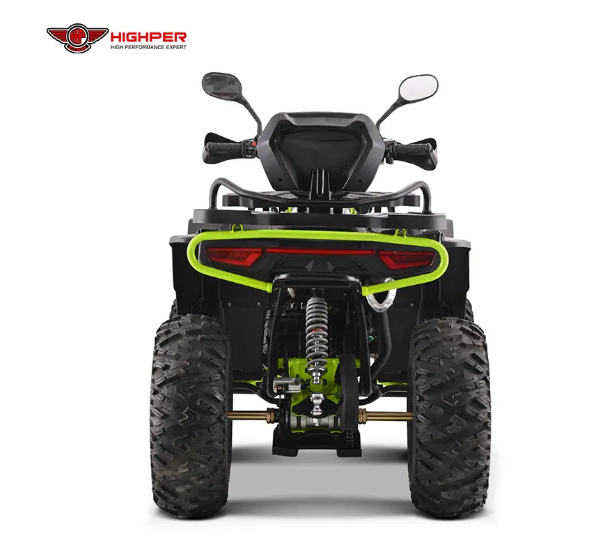
This is the philosophy behind how HIGHPER engineers its ATV lineup — from gasoline models in the 50cc to 300cc range to electric ATVs built for kids, teens, and adults. Component sourcing, sealing standards, and drivetrain design are treated as maintenance-reduction tools from the design stage, not afterthoughts. A well-engineered ATV doesn't eliminate the need for maintenance, but it dramatically lowers the frequency and cost of the repairs that maintenance is meant to prevent, which is ultimately what determines whether a quad bike is still performing well after five or ten years of use.
Frequently Asked Questions
How often should I service my ATV?
For moderate recreational use, plan on oil and filter changes every 20–25 riding hours or roughly every three months, with a full inspection (brakes, suspension, drivetrain) every 50–100 hours. Heavy off-road use shortens these intervals.
What oil is best for an ATV?
Use the viscosity and classification specified in your owner's manual — typically an ATV-specific oil designed for wet-clutch compatibility, since standard automotive oils often contain friction modifiers that can cause clutch slippage.
How often should ATV air filters be cleaned?
Inspect after every dusty or muddy ride, and clean foam filters or replace paper filters at least every 20–25 hours under normal conditions — more frequently in sandy or extremely dusty environments.
How long do ATV tires last?
ATV tires typically last between two and five seasons depending on terrain, riding frequency, and tire quality, though rocky or abrasive terrain can shorten that significantly.
Can I pressure wash an ATV?
Light pressure washing is generally safe for the frame and body panels, but avoid direct high-pressure spray on bearings, electrical connectors, the air intake, and motor housings, where it can force water past protective seals.
What maintenance should be done before every ride?
Check engine oil level, tire pressure, brake function, fasteners, and lights, and visually inspect for fluid leaks before starting the engine.
How do I improve ATV engine life?
Stick to scheduled oil and filter changes, keep the air filter clean, avoid prolonged high-RPM operation under heavy load, and address cooling issues immediately rather than continuing to ride.
How often should ATV brakes be inspected?
Inspect brake pads and fluid every 50 hours of riding, and immediately after any ride involving deep water crossings or heavy mud exposure.
Why is my ATV losing power?
Common causes include a clogged air filter, degraded fuel, a fouled spark plug, low compression from worn engine components, or — on electric models — a battery or controller issue.
What is the average lifespan of an ATV?
With consistent maintenance, a gas-powered ATV engine can last well over 1,000–3,000 hours of use, and a well-built electric ATV's core components can last a decade or more, though battery replacement is typically needed sooner than other components.
Post time: Jun-18-2026